
Best Yellow Toys for Dogs: Top Picks for 2026
Table of Contents
- Why Yellow Is the Top Choice: The Dog Vision Color Spectrum Explained
- Quick Comparison: Best Yellow Toys for Dogs
- Safe Materials for Dog Toys: Rubber, Nylon, and Non-Toxic Plastics
- Best Dog Toys for Senior Dogs: Yellow Options for Aging Canines
- Interactive vs. Solo Play: Choosing the Best Yellow Toys for Dogs by Play Style
- Size, Durability, and Safety: A Buyer's Guide for Yellow Dog Toys
- Frequently Asked Questions
Last Updated: September 13, 2026
Why Yellow Is the Top Choice: The Dog Vision Color Spectrum Explained
Dogs don't see the world in black and white, but they also don't see it the way you do. The canine color spectrum is dichromatic: dogs have two types of cone cells, compared to three in humans, which means they perceive mainly blue and yellow while red and green wash out into shades of gray or brown.
That single fact explains why the best yellow toys for dogs consistently outperform red or green alternatives. A bright yellow ball pops against grass, pavement, and just about any indoor floor, which matters when your dog is tracking a moving object at speed.
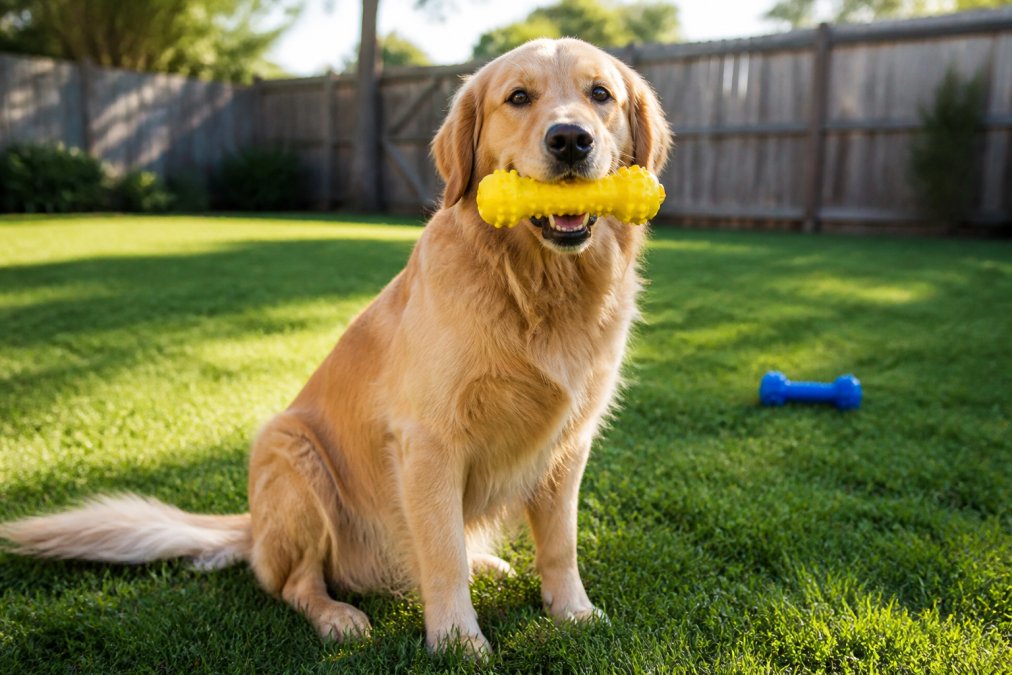
The research backs this up. A study published in ScienceDirect's research on natural rubber feeding toys found that dogs demonstrated a preference for yellow toys over blue ones, alongside a preference for vanilla-scented toys. A separate summary from The Pet Collective's overview of canine color vision reached the same conclusion: when offered a choice between different colored objects, dogs gravitated more toward yellow than blue or gray.
Here's what most guides miss. Yellow isn't just a preference, it's a functional advantage. High-visibility colors help dogs track toys mid-air and on the ground, which is exactly why bright yellow is the recommended color for soccer balls, frisbees, and rubber chew toys, according to Happy Staffy Co.'s guide to dog toy colors.
Quick Comparison: Best Yellow Toys for Dogs
The best yellow toys for dogs fall into four practical categories, each suited to a different play style and chewer profile.
| Toy Type | Best For | Durability | Key Feature |
|---|---|---|---|
| Yellow rubber chew toy | Aggressive chewers | High | Durable rubber, dental texture |
| Yellow squeaky toy | Interactive play | Medium | Auditory stimulus, fetch-friendly |
| Yellow plush toy | Gentle chewers, seniors | Low | Soft texture, crinkle material |
| Yellow nylon chew | Teething puppies | High | Chew resistance, non-toxic |
Safe Materials for Dog Toys: Rubber, Nylon, and Non-Toxic Plastics
Safe materials for dog toys come down to three reliable options: natural rubber, nylon, and non-toxic plastic. Each has a different job.
Natural rubber is the gold standard for chew resistance and bounce. It holds up to aggressive chewers, cleans easily, and works for both fetch and solo chewing. Nylon is harder and more abrasive, which makes it a strong choice for power chewers but a poor fit for seniors with worn teeth. Non-toxic plastic covers a wide range, from treat-dispensing puzzles to crinkle-free squeaker housings.
The American Kennel Club cautions that standard tennis balls are less durable than rubber alternatives, which may be a better choice for heavy chewers. That's worth repeating: the most common dog toy in the world is also one of the least durable for a determined chewer.
Best Dog Toys for Senior Dogs: Yellow Options for Aging Canines
The best dog toys for senior dogs prioritize softness, easy grip, and low-impact play over toughness. Aging canines deal with worn enamel, stiffer joints, and reduced vision, so the toy that worked at age three often stops working at age ten.
Start with the mouth, not the color. By middle age, most dogs have some degree of periodontal disease, the American Veterinary Dental College notes that by age three, most dogs already show signs of it. That changes the calculus: a hard nylon chew that a young dog ground down over months can crack a weakened senior tooth in a single session. A reasonable rule of thumb is to drop one hardness tier when a dog crosses into the senior bracket, moving from nylon to natural rubber, and from rubber to plush or fabric for dogs with significant wear.
Yellow plush toys with crinkle material are a strong fit here. The soft texture is gentle on teeth, the crinkle provides auditory stimulus without a hard squeaker, and the high-visibility color helps a dog with fading eyesight track the toy on the floor. Look for flat, low-profile shapes rather than stuffed animals with limbs, fewer seams means fewer failure points, and a senior dog that mostly mouths rather than shreds will get months of use out of a well-made flat toy.
Arthritis is the other variable. A dog with hip or elbow pain will often stop chasing a ball that rolls far, not because interest dropped but because the retrieve hurts. Shorter, higher-arcing tosses with a lightweight yellow ball keep the game alive without the sprint. Some owners find that a yellow rubber toy stuffed with wet food and frozen works better than fetch for a stiff senior: the dog stays in one spot, works the food out with the tongue, and gets mental engagement without joint load.
Interactive play matters more than solo chewing for seniors. A short toss-and-catch session keeps joints moving without the pounding of full-speed fetch, and it gives you direct feedback on your dog's mobility and mood. A common mistake is buying a "tough" toy for an older dog because it lasted with a younger one. The material density that protects against a puppy's jaws is exactly what hurts a senior's gums.
A quick senior yellow-toy checklist:
- Soft natural rubber or plush, not nylon or hard plastic
- Flat or rounded shapes with no small appendages
- Squeaker fully enclosed, or no squeaker at all
- Size large enough to grip without jaw strain, small enough to lift comfortably
- Washable surface, since older dogs often have reduced immune resilience
If your senior has lost most of its vision, yellow still helps, the color contrast against most flooring is higher than red or green, which fade into gray for a dichromatic eye. Pair that with a crinkle or a soft bell, and you give the dog two channels to locate the toy instead of one.
Interactive vs. Solo Play: Choosing the Best Yellow Toys for Dogs by Play Style
Choosing the best yellow toys for dogs starts with one question: does your dog play with you, or alone? Interactive toys are built for tug-of-war, fetch, and training aids, where you're part of the action. Solo toys are boredom busters designed to occupy a dog when you're working or away.
Interactive picks lean toward durable rubber balls, frisbees, and tug ropes in yellow. They need to survive your arm and your dog's mouth, so material density matters more than novelty. Solo picks lean toward treat-dispensing puzzles, nylon chews, and textured rubber toys that reward licking, gnawing, and problem-solving.
Industry experts increasingly emphasize selecting toys that stimulate the mind rather than just providing chewing outlets, according to KC Dawgz's guidance on dog toy selection. That shift toward enrichment over simple chewing is reshaping what "good toy" means. A yellow puzzle toy that makes your dog think beats a plain chew that just wears down teeth.
Size, Durability, and Safety: A Buyer's Guide for Yellow Dog Toys
Size is the most overlooked safety factor in dog toys. A toy that's too small becomes a choking hazard; one that's too large gets ignored. For medium to large breeds, look for balls at least 2.5 inches across. The Project Hive Pet Company Ball, a top-rated yellow dog toy for 2026, measures 2.53 x 2.69 x 2.42 inches, which sits right in the safe zone for most medium and large dogs.
Breed shape changes the math more than breed size. A Greyhound or Whippet has a long, narrow muzzle and a small mouth opening relative to its body weight, a ball that a Labrador retriever grips easily can be too wide for a sighthound to pick up cleanly, and a ball that fits a sighthound can slip down a Bulldog's throat. Brachycephalic breeds (Bulldogs, Pugs, Boston Terriers) have short jaws and often can't get a proper grip on standard round balls at all; flat toys, tug shapes, and low-profile discs work better. Scent hounds like Beagles tend to engage toys with the nose first and the mouth second, so a yellow toy with a treat pocket or a scent-trapping fabric surface holds attention longer than a plain ball. None of this is about color, it's about matching the toy's geometry to the dog's anatomy, and it's the step most buying guides skip.
Durability follows material, not marketing. Rubber outlasts plush. Nylon outlasts rubber for pure chew resistance but loses on bounce and fetch. Plush toys fail fastest, especially with aggressive chewers, though they remain the right call for gentle seniors. A useful way to think about it: rubber flexes and returns, nylon resists and abrades, plush yields and tears. Match the failure mode to the dog's chewing style. A dog that gnaws in one spot needs rubber. A dog that scrapes with the back teeth needs nylon. A dog that shakes and rips needs fabric that's sewn, not glued.
Safety standards to check before you buy:
- No loose or accessible squeaker parts
- Non-toxic, pet-safe materials listed on the label
- Size appropriate for your breed's mouth
- No small pieces that can break off under pressure
- Washable or wipe-clean surface for dental health and hygiene
Environmental testing matters too, and it's an angle most guides skip. A yellow toy's visibility is not constant, it depends on where the dog plays. In tall grass, a yellow ball at ground level blends into the yellow-green of sunlit blades and disappears; a yellow frisbee in flight stays visible because it's above the grass line. In snow, yellow is one of the highest-contrast colors available, which makes winter fetch one of the best use cases for a yellow toy. Indoors under warm LED lighting, yellow reads clearly against wood and tile but can wash out against beige carpet. The practical takeaway: pick the yellow toy's shape for the environment, not just its color. Discs and high-arc balls for grass, standard balls for snow and pavement, and flat or crinkly toys for indoor floors.
Sun exposure is the other environmental factor. Toys left outdoors in direct ultraviolet light degrade faster, especially plastics and dyed fabrics, the dye fades, the rubber stiffens, and seams weaken. Rotate outdoor yellow toys more frequently than indoor ones, and inspect seams after every few outdoor sessions. A toy that looks fine on the shelf can fail on the third sunny afternoon.
Frequently Asked Questions
Are yellow toys good for dogs?
Yes. Dogs have dichromatic vision, meaning they see primarily blue and yellow tones. Research from ScienceDirect (2024) shows dogs prefer yellow toys over blue ones. Yellow creates high visual contrast against grass, floors, and most backgrounds, making it easier for dogs to track during fetch and play.
What color toys do dogs like the most?
Dogs gravitate toward yellow and blue toys because those are the two hues their eyes can distinguish. A 2024 ScienceDirect study found dogs preferred yellow toys over blue ones when given a choice. The Pet Collective (2026) also reported dogs chose yellow over blue or gray objects. Yellow dog toys offer the best outdoor visibility, especially against green grass, making them a practical and preferred pick for retrieval games.
Can dogs see yellow toys better than red ones?
Yes. Dogs lack the red-sensitive cones that humans have, so red appears as a dull brown or gray to them. Yellow falls squarely within the canine color spectrum and stands out clearly. For outdoor play, yellow dog toys contrast sharply against grass and foliage. This is why trainers and toy makers recommend high-visibility yellow for fetch, toss-and-catch, and any activity where your dog needs to spot the toy quickly.
What are the safest materials for yellow dog toys?
Non-toxic natural rubber, food-grade nylon, and BPA-free plastics are the safest options. Avoid toys with painted surfaces that may chip, and check for loose squeakers or crinkle material that can become a choking hazard. For aggressive chewers, durable rubber outperforms plush. The American Kennel Club (2026) notes standard tennis balls wear down faster than rubber alternatives, so rubber yellow dog toys are a better long-term choice for heavy chewers.