
Safe Toys for Aggressive Chewers: 2026 Guide
Table of Contents
- What Makes a Dog an Aggressive Chewer
- Safe Toys for Aggressive Chewers: Top Picks Compared
- Non-Toxic Chew Toys for Dogs: Materials That Matter
- Signs a Dog Toy Is Unsafe: What to Watch For
- How to Choose Safe Dog Toys for Your Specific Dog
- How to Introduce Safe Toys for Aggressive Chewers
- Frequently Asked Questions
Last Updated: August 31, 2026
Finding safe toys for aggressive chewers is harder than it looks. Most pet owners discover this the hard way: a toy marketed as "durable" lasts forty minutes before becoming a choking hazard. At Tech Sphere and More, we've put together this guide to help you cut through the marketing noise and identify toys that actually hold up for power chewers, without putting your dog at risk.
According to the American Veterinary Medical Association's pet safety resources, foreign body ingestion from destroyed toys is one of the most common reasons dogs end up in emergency veterinary care. Choosing the wrong toy isn't just a waste of money, it can be a genuine health crisis.
Quick Picks:
- Best Overall: KONG Extreme, the gold standard for most aggressive chewers
- Best Safety Feature: GoughNuts, built-in red indicator tells you exactly when to replace
- Best for Dental Health: Nylabone Dura Chew, veterinarian-recommended with tartar-fighting texture
- Best Eco-Friendly Option: West Paw Zogoflex Tux, recyclable, FDA-compliant, and dishwasher safe
- Best Flavor-Driven Chew: Benebone Wishbone, real food ingredients that keep dogs engaged
What Makes a Dog an Aggressive Chewer
An aggressive chewer, also called a power chewer, is a dog that applies sustained, high-force biting to toys and objects, often destroying standard toys within minutes. Certain breeds are almost universally in this category: Rottweilers, American Pit Bull Terriers, German Shepherds, Labrador Retrievers, and Mastiffs. But chew intensity isn't purely breed-specific, a bored Border Collie or anxious rescue dog can chew through a "tough" toy just as fast.
Signs your dog is a power chewer include standard toys destroyed within a single session, squeakers extracted within minutes, and regularly finding large chunks of material. Understanding your dog's chew intensity determines which material density and design specifications are appropriate.
Safe Toys for Aggressive Chewers: Top Picks Compared
The five toys below represent the most consistently recommended options for power chewers, selected based on material safety, verified durability, and real-world chewing behavior.
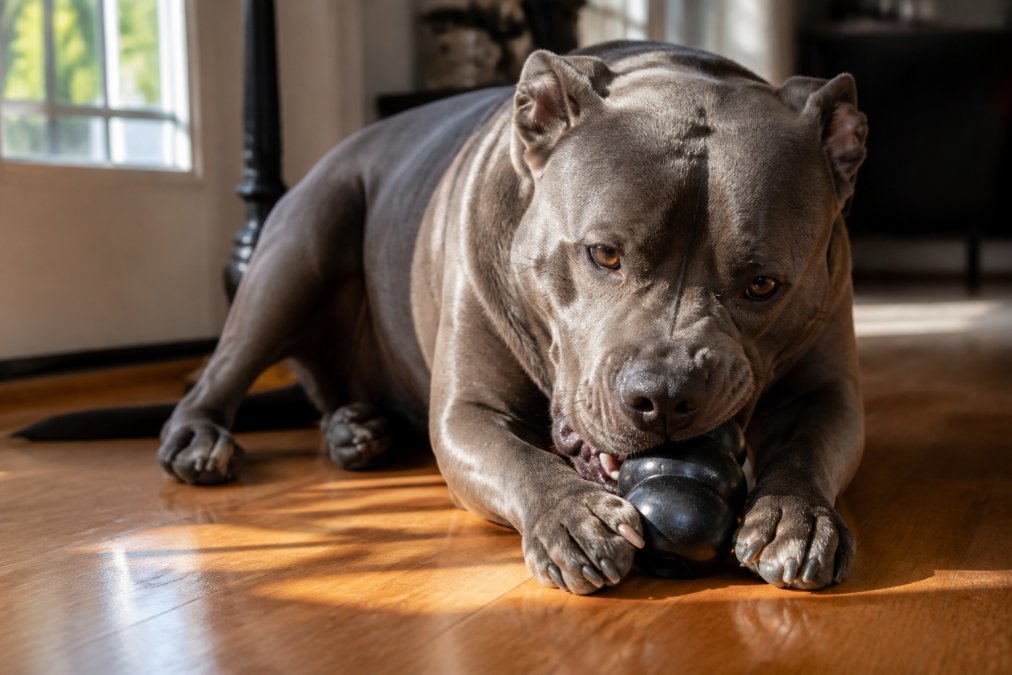
1. KONG Extreme Dog Toy, Best Overall for Power Chewers
The KONG Extreme is the benchmark against which every other heavy-duty chew toy is measured. Made from KONG's proprietary black natural rubber formula, it's the densest and most durable material in their lineup. The hollow center allows you to stuff it with kibble, peanut butter, or frozen purees, transforming a chew toy into an interactive enrichment tool.
Best for: Dogs with extreme chewing habits who benefit from treat-dispensing engagement.
Pros:
- Natural rubber is non-toxic and splinter-resistant
- Available in Small through XXL for size-appropriate fit
- Erratic bounce adds fetch value beyond chewing
- Helps clean teeth and gums through texture interaction
Cons:
- No toy is truly indestructible; supervised play is still recommended
- Stuffed versions require thorough cleaning to prevent bacterial buildup
If your dog destroys this, you're dealing with an outlier level of bite force and need to escalate to the GoughNuts line.
2. GoughNuts Indestructible Dog Toy, Best Safety Feature
GoughNuts makes the most honest toy on this list. Made in the USA from a proprietary carbon rubber compound, these toys are built for dogs that have defeated everything else. The defining feature is the patented red safety indicator, a red core layer beneath the outer black rubber that signals when replacement is needed.
Best for: Owners of extremely aggressive chewers who want a clear replacement signal and a lifetime guarantee.
Pros:
- Lifetime chew-through guarantee (replace if your dog gets through it)
- Non-toxic, safe materials with no splintering risk
- Red safety indicator removes ambiguity about replacement timing
- Floats in water for multi-environment play
Cons:
- Higher price point than most alternatives
- Some dogs lose interest without squeakers or varied textures
3. West Paw Zogoflex Tux, Best Eco-Conscious Option
The West Paw Zogoflex Tux uses flexible, high-density material that absorbs bite force rather than resisting it, making it gentler on teeth than hard nylon toys. It's BPA-free, latex-free, FDA-compliant, and recyclable through West Paw's take-back program.
Best for: Tough chewers whose owners want a treat-dispensing toy that's also dishwasher safe and eco-friendly.
Pros:
- Flexible material is gentler on teeth and gums than hard nylon
- Stuffable cavity extends engagement time significantly
- Dishwasher safe, making sanitization straightforward
- Made in the USA with recyclable materials
Cons:
- More expensive than some comparable treat-dispensing toys
- Fast treat-extractors may lose interest quickly
4. Nylabone Dura Chew Power Chew, Best for Dental Health
Nylabone Dura Chew toys are veterinarian-recommended and designed specifically for aggressive chewers' dental health. The nylon construction withstands sustained power chewing, while ridges and textured surfaces reduce plaque and tartar buildup.
Best for: Aggressive chewers who need dental hygiene support and respond well to flavor-driven motivation.
Pros:
- Promotes dental health through texture and mechanical cleaning action
- Long-lasting nylon construction for power chewers
- Flavor variety maintains interest over time
Cons:
- Hard nylon surface raises concern about tooth wear with excessive use
- Not all dogs engage with nylon textures
According to veterinary dental guidance from the American Veterinary Dental College, toys that don't flex when pressed with your thumbnail carry a higher risk of slab fractures on carnassial teeth. Monitor your dog's chewing style and check teeth regularly.
5. Benebone Wishbone, Best for Flavor-Motivated Chewers
The Benebone Wishbone solves an ergonomic problem most chew toys ignore. The wishbone shape allows a dog to pin one end with a paw while working the other, enabling sustained engagement. It's made from USA-sourced nylon infused with real food ingredients, actual bacon, chicken, or peanut butter.
Best for: Flavor-motivated aggressive chewers who benefit from an easy-grip design.
Pros:
- Real food ingredients are highly appealing and long-lasting
- Ergonomic shape enables natural, sustained chewing posture
- Durable nylon construction for power chewers
Cons:
- Hard nylon carries the same tooth wear caveat as other nylon chews
- Some dogs prefer softer textures
Comparison Table: Safe Toys for Aggressive Chewers
| Toy | Material | Best For | Dishwasher Safe | Key Safety Feature |
|---|---|---|---|---|
| KONG Extreme | Natural black rubber | Most power chewers | No (hand wash) | Non-toxic, splinter-resistant |
| GoughNuts | Carbon rubber compound | Extreme chewers | No | Red safety indicator |
| West Paw Zogoflex Tux | Flexible Zogoflex TPE | Eco-conscious owners | Yes | BPA-free, FDA-compliant |
| Nylabone Dura Chew | Nylon | Dental health focus | No | Vet-recommended |
| Benebone Wishbone | Nylon + real ingredients | Flavor-motivated chewers | No | Ergonomic grip design |
Non-Toxic Chew Toys for Dogs: Materials That Matter
Non-toxic chew toys are made from materials that do not release harmful chemicals during chewing and do not produce sharp fragments when worn. For aggressive chewers, material selection is the single most important safety variable.
Materials to Seek Out
Natural rubber is the safest option for most power chewers. High-density natural rubber is non-toxic, hypoallergenic, and splinter-resistant. It flexes under bite force rather than fracturing, eliminating the risk of sharp edges.
Reinforced nylon is appropriate for dogs that prefer a harder chew surface. Veterinarian-approved nylon toys provide dental benefits through mechanical cleaning. Choose nylon toys specifically rated for power chewers.
Zogoflex and similar TPE materials (thermoplastic elastomers) are BPA-free, latex-free, and FDA-compliant. These materials combine durability with flexibility, making them a strong choice for owners concerned about tooth wear.
Materials to Avoid
Rawhide presents multiple risks for aggressive chewers. Large chunks can be swallowed before adequately softened, creating a choking hazard or intestinal blockage.
Splintering materials including cooked bones, antlers, and hard hooves carry a documented risk of shard formation under high bite force. According to the FDA's guidance on pet treat safety, cooked bones are among the most common causes of oral injuries and gastrointestinal perforations in dogs.
Cheap plastic toys with unknown material sourcing may contain phthalates, BPA, or lead-based colorants. If a toy doesn't specify non-toxic materials and carry verifiable safety certification, treat it as suspect.
Signs a Dog Toy Is Unsafe: What to Watch For
A dog toy becomes unsafe the moment its structural integrity is compromised. For aggressive chewers, that moment arrives faster than most owners expect.
Wear Patterns That Signal Replacement Time
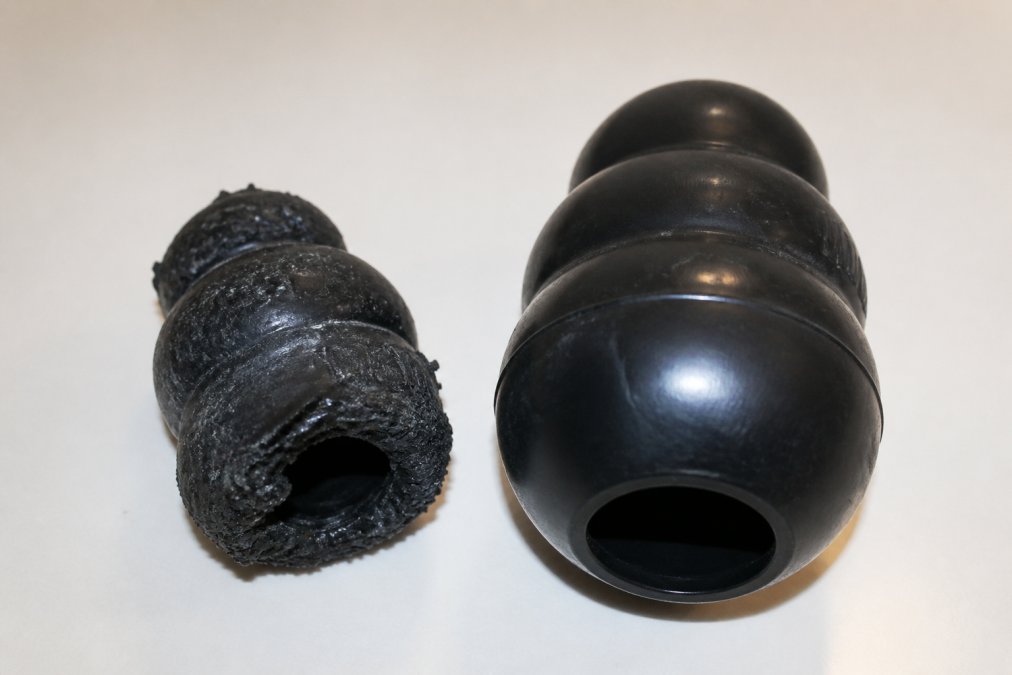
Remove a toy immediately if it shows exposed layers or cores, surface cracking, missing chunks, fraying edges on nylon toys, or significant size reduction making it a choking hazard.
Emergency Safety Protocols
If your dog ingests a piece of a toy, identify the material type and estimate the fragment size, then call your veterinarian or an emergency animal hospital immediately. Do not induce vomiting without veterinary guidance.
For suspected choking, apply firm upward pressure just below the ribcage. The American Red Cross pet first aid guidance provides step-by-step instructions for canine choking response.
How to Choose Safe Dog Toys for Your Specific Dog
Choosing safe dog toys requires matching material density, toy size, and design to your specific dog's jaw strength, age, and chewing style. A toy that's safe for a 20-pound Beagle can be a choking hazard for a 90-pound Rottweiler.
Size and Breed Considerations
Toy size is not optional. The toy should be large enough that your dog cannot place it past their molars.
For breed-specific guidance:
- Large breeds with high bite force (Mastiffs, Rottweilers, American Bulldogs): prioritize maximum material density with KONG Extreme XXL or GoughNuts Maxx.
- Medium breeds with moderate-to-high bite force (German Shepherds, Labrador Retrievers, Boxers): KONG Extreme Large or West Paw Zogoflex Tux in large size.
- Small breeds that are aggressive chewers (Jack Russell Terriers, Chihuahuas, Dachshunds): material density matters more than size with KONG Extreme Small.
Jaw strength varies significantly even within breeds. Observe your individual dog, not just the breed average.
Age-Specific Safety: Puppies vs. Senior Dogs
Puppies are in a critical developmental window. Their adult teeth are erupting and jaw structure is still forming. Hard nylon chews are not appropriate for puppies under six months. Puppy-specific rubber toys with softer compounds are the correct choice.
Senior dogs often develop dental disease, gum sensitivity, and jaw arthritis. A toy that was appropriate at age three may cause pain at age ten. Senior dogs benefit from softer rubber options or toys designed for gentler chewing.
How to Introduce Safe Toys for Aggressive Chewers
Introducing a new chew toy correctly extends its lifespan and reduces safety risks.
Step 1: Supervised first session (15-20 minutes) Stay present for the first interaction. Watch how your dog approaches the toy to determine if the design matches their chewing style.
Step 2: Inspect after the first session Examine the toy for surface changes: crazing, edge deformation, or material loss. If the toy shows significant wear after one session, it's not the right material density for your dog.
Step 3: Rotate toys to prevent fixation Rotating three to four toys on a weekly basis maintains novelty and distributes wear across multiple items.
Step 4: Establish a replacement cycle Most rubber toys for power chewers should be inspected weekly and replaced at the first sign of structural compromise. Nylon toys typically show surface wear before structural failure, but any sharp edges or significant size reduction triggers immediate replacement.
Step 5: Match the toy to the context Stuffed treat toys like the KONG Extreme or Zogoflex Tux are excellent for unsupervised periods in a crate or safe space. Non-stuffed chews like GoughNuts or Benebone are better for supervised interactive sessions.
| Step | Action | Timing |
|---|---|---|
| 1 | Supervised first session | First use, 15-20 min |
| 2 | Post-session inspection | After every session initially |
| 3 | Toy rotation | Weekly |
| 4 | Replacement assessment | Ongoing, based on wear |
| 5 | Context matching | Every session |
Finding safe toys for aggressive chewers takes more than grabbing whatever's labeled "tough" at the pet store. Power chewers need toys matched to their specific bite force, jaw size, and chewing style, with clear protocols for monitoring wear and replacing toys before they become hazards. Tech Sphere and More carries a curated selection of high-quality pet products, including heavy-duty chew toys, chosen with the same attention to quality that owners of serious chewers demand. Browse our pet product selection and find the right match for your dog's chewing intensity.
Frequently Asked Questions
What is the safest material for dog chew toys?
Natural rubber is widely considered the safest material for aggressive chewers. It flexes under bite pressure rather than splintering, reducing the ingestion risk that comes with harder materials. Look for toys labeled non-toxic, BPA-free, and free of phthalates. Veterinary-approved options like the KONG Extreme use natural black rubber formulated specifically for power chewers. Heavy-duty nylon toys are also a common choice, though they carry some concern around tooth wear with prolonged use.
How do I know if a toy is safe for my aggressive chewer?
Check for signs a dog toy is unsafe during and after each play session: visible cracks, chunks missing, exposed inner layers, or sharp edges all mean the toy should be retired immediately. A good rule of thumb is the thumbnail test: if you can press your thumbnail into the material and it leaves a mark, the toy has enough give to be tooth-safe. Toys that are too hard risk cracking teeth. Always supervise the first several sessions with any new toy before allowing unsupervised play.
Is there a dog toy my dog can't destroy?
No toy is truly indestructible, regardless of marketing claims. GoughNuts comes close with its lifetime chew-through guarantee and a built-in red safety indicator that shows when the toy needs replacing. For most power chewers, the realistic goal is a toy that lasts weeks or months rather than minutes. Rotating between two or three durable options also extends the life of each toy and keeps your dog's interest through texture variety and enrichment.
What safe, long-lasting chews can I give my dog?
Rubber toys stuffed with frozen peanut butter or kibble, like the KONG Extreme or West Paw Zogoflex Tux, extend chew sessions safely because dogs work to extract food rather than simply destroy the toy. Nylon chews like the Nylabone Dura Chew or Benebone Wishbone are flavored throughout and designed for sustained chewing. Always match the toy's size rating to your dog's weight, and check for wear after every session to catch choking hazards early.
Do aggressive chewer toys have a different safety standard for puppies and senior dogs?
Yes. Puppies have developing teeth that can be damaged by toys rated for adult power chewers. Choose softer rubber options and avoid hard nylon until adult teeth are fully in, typically around 6 to 7 months. Senior dogs often have worn or brittle teeth, so the same hard nylon toys that suit a healthy adult can cause fractures. For older dogs, flexible natural rubber with lower material density is the safer choice. Always consult your vet if your dog has known dental issues before introducing any new chew toy.
This article was written using GrandRanker