
How to Find Reputable Pet Stores: A 2026 Guide
Table of Contents
- Why Finding a Reputable Pet Store Matters
- Evaluate Ethical Pet Store Standards and Sourcing
- Check Product Quality, Inventory Variety, and Pet Health Standards
- Questions to Ask Pet Store Staff
- Independent vs Chain Pet Stores: Which Is Right for You
- Verify Reputation Through Reviews, Transparency, and Customer Feedback
- Online vs In-Store Shopping: Comparing Your Options
- Frequently Asked Questions
Last Updated: September 27, 2026
Why Finding a Reputable Pet Store Matters
Finding a reputable pet store is about more than convenience. It directly impacts your pet's health, safety, and wellbeing. A reputable pet store combines quality inventory, ethical sourcing, knowledgeable staff, and transparent practices. According to the 2026 American Pet Products Association report, pet owners who shop at vetted retailers report higher satisfaction with product quality and staff expertise.
Poor-quality products can harm your pet. Unethical sourcing practices support animal suffering. Staff without proper training can give dangerous advice. Choosing wisely protects your pet and supports responsible businesses.
Below, we'll show you exactly how to evaluate pet stores so you can make decisions aligned with your values and your pet's needs.
Evaluate Ethical Pet Store Standards and Sourcing
Ethical sourcing is a non-negotiable foundation for reputable pet stores. Start by asking direct questions about sourcing and requesting information about the brands the store carries. A reputable store will have answers ready and can explain their vetting process.
Look for these specific indicators:
- Written sourcing policies posted in-store or online
- Supplier certifications (organic, fair trade, cruelty-free where applicable)
- Refusal to sell certain products due to ethical concerns
- Regular audits of supplier practices
- Transparency about where live animals originate (if applicable)
Research from ScienceDirect's behavioral study found significant differences in the health outcomes of animals sourced through different channels, underscoring why sourcing affects the animals you bring home.
Many reputable stores now publish sustainability reports or ethical sourcing statements. A store unwilling to share this information may not prioritize animal welfare.
Check Product Quality, Inventory Variety, and Pet Health Standards
Product quality directly affects your pet's health. Reputable pet stores stock items that meet rigorous safety standards and deliver real nutritional or functional value. The store's physical environment and safety protocols matter equally, especially if the store houses live animals or offers grooming and boarding services.
Assess product quality on the shelf:
Examine products carefully. Check expiration dates; they should be current and not approaching expiry. Look at packaging for damage or signs of poor storage. Read ingredient lists on pet food, high-quality formulations list meat as the first ingredient and avoid excessive fillers, by-products, or artificial additives. For supplements and treats, verify that the manufacturer lists contact information, indicating they stand behind their products.
Inventory variety matters because different pets have different needs. A senior dog requires different nutrition than a puppy. Cats with allergies need specialized diets. A store with limited selection forces you to compromise on what's best for your pet.
Evaluate store safety and health protocols:
A reputable pet store maintains cleanliness and safety standards that protect both animals and customers.
-
Overall cleanliness: Floors should be clean and free of debris. Shelves should be organized and dust-free. Odor should be minimal, a strong animal smell suggests poor ventilation or infrequent cleaning.
-
Live animal housing (if applicable): If the store sells fish, reptiles, birds, or small animals, inspect their enclosures. Tanks and cages should be clean, properly sized, and equipped with appropriate heating, lighting, and enrichment. Animals should appear alert and healthy, not lethargic or visibly injured.
-
Grooming and boarding facilities: If the store offers these services, ask to see the grooming area and boarding kennels. Facilities should be climate-controlled, well-lit, and clean. Ask about vaccination requirements for boarding, reputable stores require proof of current vaccines to prevent disease transmission.
-
Food storage: Dry food should be stored in sealed, pest-proof containers away from moisture and direct sunlight. Refrigerated items should be in functioning coolers at proper temperatures.
-
Pest control: Look for signs of pest activity. A reputable store has documented pest control protocols and maintains a clean environment that discourages infestations.
-
Staff hygiene practices: Observe whether staff wash hands between handling animals and products. Poor hygiene can spread disease.
Ask about pet health standards the store follows:
-
"What vaccination or health requirements do you have for animals in your care?" Reputable stores require proof of current vaccines to prevent disease outbreaks.
-
"Do you stock prescription or veterinary-recommended diets?" This indicates the store works with veterinarians and understands medical nutrition.
-
"Can staff explain nutritional differences between products?" A knowledgeable employee should discuss protein sources, fat content, and fiber.
-
"Do you carry products for pets with special needs (allergies, age-specific, weight management, kidney disease, digestive issues)?" Limited variety in therapeutic diets suggests the store doesn't cater to pets with medical conditions.
-
"Is there a quality guarantee or return policy for products that don't work?" Reputable stores accept returns if a pet doesn't tolerate a food or supplement.
-
"How do you handle product recalls?" A store that can't answer this question may not be tracking safety alerts.
Understand market trends in product quality:
Questions to Ask Pet Store Staff
Staff expertise separates reputable pet stores from mediocre ones. Knowing what certifications to look for empowers you to assess whether employees can guide your pet's health decisions.
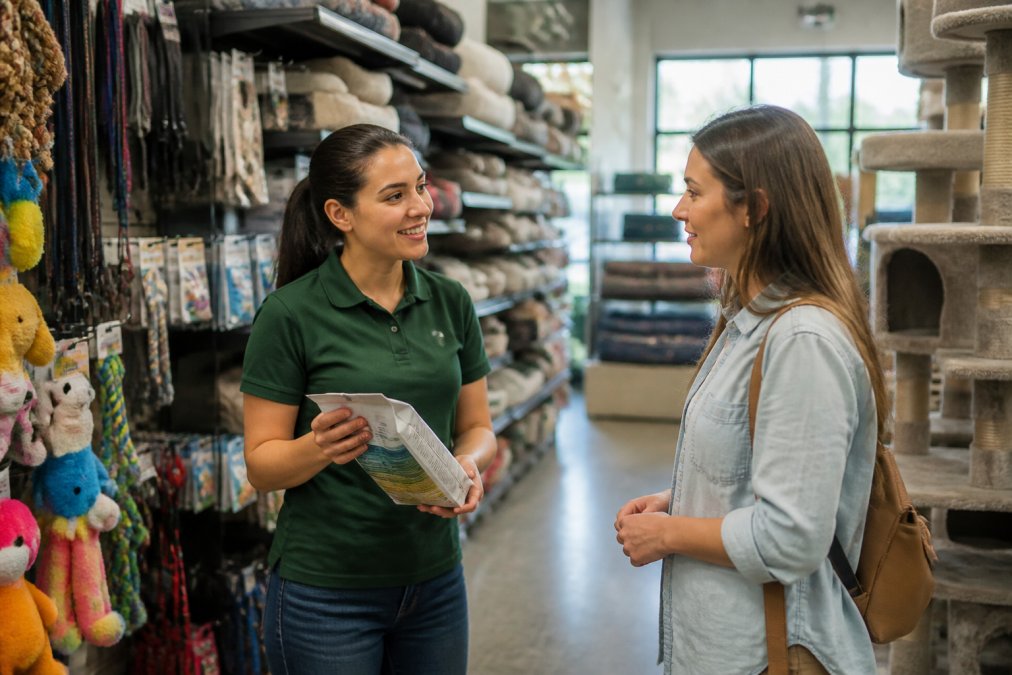
Ask about staff credentials and training:
-
"What certifications or formal training do your staff members have?" Listen for specific credentials such as:
- Certified Pet Nutritionist (CPN), indicates formal study in animal nutrition
- Certified Animal Behavior Consultant (CABC), demonstrates training in animal behavior and handling
- Veterinary Technician (VT) or Veterinary Assistant (VA), licensed or certified by state veterinary boards
- Professional Groomer Certification, from organizations like the National Association of Dog Groomers
- Fear Free Certified, training in low-stress handling for anxious pets
-
"How do your staff members stay current on pet health and product information?" Reputable stores invest in ongoing education. Staff who can name specific continuing education programs are more credible than those who say "we just learn on the job."
-
"Can you walk me through how you'd recommend a product for my pet's specific health concern?" Observe whether the employee asks detailed follow-up questions about age, weight, activity level, medical conditions, current diet, and previous reactions. Generic recommendations without diagnostic questions suggest limited expertise.
-
"Do you have a veterinarian on staff or consult with local vets on product recommendations?" Some reputable stores employ or partner with licensed veterinarians who review product selections and staff training.
-
"What's your return policy if my pet has an adverse reaction to a product?" Reputable stores accept returns even if the product was partially used.
Red flags in staff responses:
- Inability to name or explain any certifications
- Pushing expensive items without asking about your pet's specific needs
- Vague answers about ingredient sourcing or product benefits
- Dismissing concerns about product ingredients or safety
- No awareness of common pet health issues
- Unwillingness to admit they don't know an answer
Why credentials matter:
Independent vs Chain Pet Stores: Which Is Right for You
Both independent and chain pet stores have distinct advantages. The choice depends on your priorities and what each option offers in your area.
Verify Reputation Through Reviews, Transparency, and Customer Feedback
Third-party reviews provide honest feedback from other pet owners. They reveal patterns about customer service, product quality, and reliability.
Check multiple review platforms:
- Google Reviews and Maps
- Yelp
- USA Today's 2026 Best Pet Stores list, which highlights top-rated shops based on expert panels and reader voting
Look for transparency indicators:
- Clear return and exchange policies posted or readily available
- Honest product descriptions without exaggerated health claims
- Willingness to disclose supplier information
- Open communication about pricing and promotions
- Public commitment to animal welfare standards
Online vs In-Store Shopping: Comparing Your Options
Both shopping methods have merit. The best choice depends on your needs, preferences, and what each option offers.
Consider this comparison:
| Factor | In-Store | Online |
|---|---|---|
| Product Inspection | Yes | No |
| Staff Expertise | Available | Limited (chat/phone) |
| Selection | Good | Excellent |
| Convenience | Moderate | High |
| Pricing | Variable | Often Competitive |
| Shipping | Immediate | 1-7 days |
| Returns | Easy | More Complex |
Frequently Asked Questions
What red flags should I look for in a reputable pet store?
Watch for dirty store conditions, poor animal welfare practices if live animals are sold, staff unable to answer product questions, expired inventory, vague sourcing information, and no return policy. A reputable pet store maintains clean facilities, employs knowledgeable staff, displays product certifications, and openly discusses where products come from. Trust your instincts, if something feels off about the store's practices or transparency, it likely is.
How can I tell if a pet store sources animals ethically?
Ask staff directly about their sourcing practices and request documentation. Reputable retailers should identify their suppliers by name and be willing to discuss breeding standards or rescue partnerships. Check for certifications from recognized animal welfare organizations. Research the store online for any history of ethical complaints. Avoid stores that won't answer sourcing questions or seem evasive about where animals come from, transparency is a hallmark of ethical operations.
Are local independent pet stores better than national chains?
Both independent and chain pet stores can be reputable; the difference lies in individual store practices. Independent stores often offer personalized service and curated selections, while chains provide consistency and broader inventory. Evaluate each retailer on its own merits: staff expertise, product quality, customer service, ethical standards, and community trust. Some independent shops excel; some chains do too. Your location and specific pet needs should guide your choice, not the store's size alone.
What certifications should a reputable pet store have?
Look for staff trained in pet nutrition, animal behavior, or grooming through recognized programs. Stores handling live animals should comply with local and state animal welfare regulations. Pet food retailers should stock products meeting AAFCO (Association of American Feed Control Officials) standards. Ask about staff certifications in pet first aid, grooming, or training. Third-party certifications from animal welfare organizations also signal commitment to ethical practices. Don't assume all staff are certified, ask directly what training they've completed.