
Benefits of Premium Pet Toys: A 2026 Guide
Table of Contents
- What Makes a Pet Toy 'Premium' in 2026
- The Real Benefits of Premium Pet Toys for Your Dog
- Durable Dog Toys for Aggressive Chewers
- Benefits of Puzzle Toys for Dogs
- How to Choose Safe Dog Toys
- Cost-Per-Use: Why Premium Toys Can Cost Less Over Time
- Conclusion
- Frequently Asked Questions
Last Updated: September 24, 2026
What Makes a Pet Toy 'Premium' in 2026
The pet toys market is projected to reach $11.6 billion in 2026, with premium pet toys at the center of that growth. Owners keep asking what separates a $30 toy from a $5 one, and whether the difference is real.
Three things separate premium from standard:
- Material safety. Food-grade silicone, natural rubber, and BPA-free construction instead of recycled mystery plastic.
- Behavioral design. Toys built around mental stimulation, dental hygiene, or chewing needs rather than generic squeakers.
- Durability testing. Chew resistance rated for real dogs, not shelf appeal.
The Real Benefits of Premium Pet Toys for Your Dog
The benefits of premium pet toys go beyond entertainment. Research from Research and Markets' pet toys forecast found that modern toys are engineered with specific objectives: reducing separation anxiety, providing dental stimulation, and preventing destructive behaviors.
Mental Stimulation and Cognitive Enrichment
Mental stimulation means giving a dog problems to solve, and it's the most underrated benefit of a premium toy. Puzzle feeders, treat-dispensing balls, and scent games force curiosity-driven learning rather than passive play. A mentally tired dog is a calmer dog: twenty minutes of problem-solving often does more for behavioral wellness than an hour of fetch.
Physical Exercise and Weight Management
Premium toys built for interactive play keep dogs moving with purpose. Flirt poles, tug toys, and fetch toys with unpredictable bounce patterns encourage sprinting, turning, and jumping in short bursts.
Dental Health and Plaque Reduction
Dental hygiene is where premium construction pays off most directly. Textured chew toys and molar toothbrushes work against plaque and tartar while the dog chews, far easier than wrestling a toothbrush into a reluctant mouth.
Durable Dog Toys for Aggressive Chewers
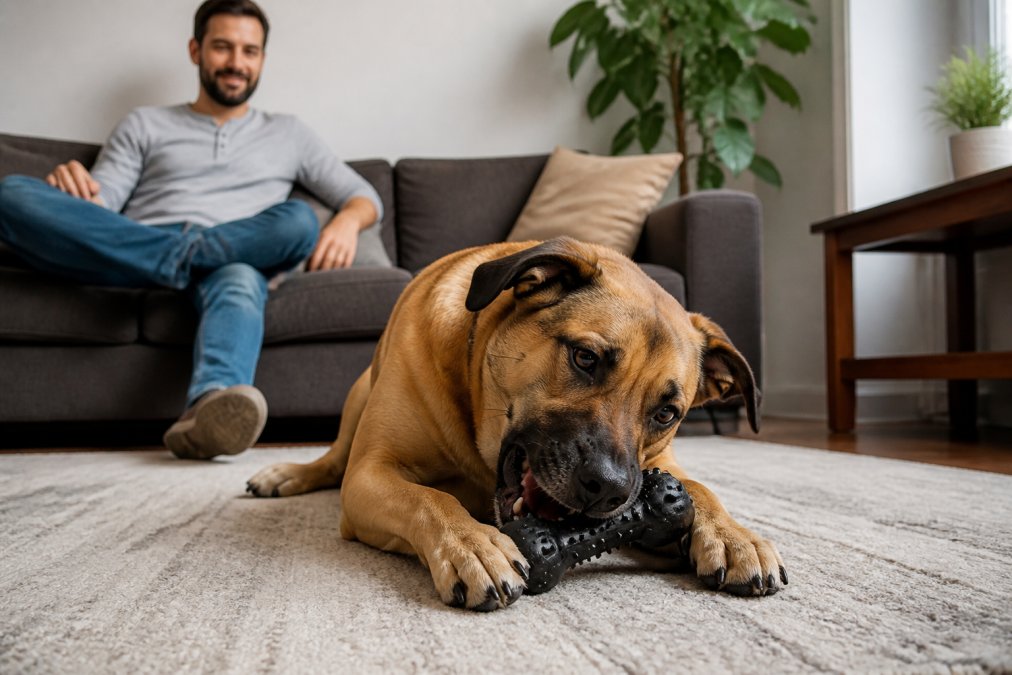
Durable dog toys for aggressive chewers are rated for sustained bite force, typically made from natural rubber or reinforced thermoplastic rather than soft vinyl. Soft toys shred, and shredded plastic becomes a swallowing hazard.
How to Evaluate Durability Before You Buy
You can't run a bite-force test in a store aisle, but four checks predict most premature failures:
- Flex test. Squeeze the toy firmly. A premium chew toy should flex and rebound without leaving a crease. If it stays deformed, the polymer has poor elastic recovery and will tear at the fold line.
- Wall-thickness check. Pinch the sidewall between thumb and forefinger. If it collapses to paper thinness, the toy is a shell, not a chew. Thick, uniform walls distribute bite force; thin walls concentrate it.
- Seam and plug inspection. Look for mold seams, glued joints, or a hollow squeaker chamber. These are the first failure points. Single-piece molded designs with no seams last measurably longer because there is no joint to split.
- Weight-to-size ratio. A toy that feels unusually light for its size is usually hollow or made from low-density filler. Density correlates with chew life more reliably than color, brand, or marketing claims.
Material Hardness and the Chew Scale
Natural rubber and reinforced thermoplastic elastomer (TPE) sit at the top of the chew-toy durability range, but "harder" isn't automatically "better." A toy harder than your dog's enamel can chip or fracture teeth, far more expensive than a destroyed toy. Most veterinary dentists advise a chew toy with enough give to dent slightly under a thumbnail but not enough to compress easily.

Failure Modes to Watch For
Even a well-made toy degrades. The three riskiest failure modes are:
- Chunking. The toy breaks off in pieces large enough to swallow. This is the most dangerous outcome and the reason supervision matters even with premium products.
- Squeaker exposure. Once the squeaker housing is breached, the plastic reed becomes a choking and obstruction hazard. Retire the toy at the first sign of a puncture near the squeaker.
- Surface pitting. Small pits and gouges trap bacteria and signal that the polymer is breaking down. A pitted toy is no longer cleanable and should be replaced.
Rotation Extends Life More Than Toughness
A counterintuitive finding from long-term owners: rotating three or four durable toys extends each one's usable life more than buying a single "indestructible" toy. Novelty drives chewing intensity, so a new-to-the-dog toy gets chewed harder. A weekly rotation spreads that intensity and reduces the concentrated wear that destroys a favorite toy in weeks.
Pet Dog Chew Toy Molar Toothbrush →
Benefits of Puzzle Toys for Dogs
The benefits of puzzle toys for dogs come down to one mechanism: they convert food into work. Instead of eating from a bowl in ninety seconds, a dog noses, paws, and problem-solves for ten minutes. Boredom-driven destruction, chewed baseboards, shredded cushions, usually drops when a dog has an outlet for problem-solving, and slow feeding helps digestion and bloat risk in fast eaters.
How to Choose Safe Dog Toys
Knowing how to choose safe dog toys means reading the label like a food label, not marketing copy. Most ranking guides offer a checklist of materials to prefer, useful but incomplete, because pet toy package wording is largely unregulated and the same phrase can mean very different things depending on who uses it.
What the Common Labels Actually Mean
- BPA-free. Bisphenol A is an industrial chemical used in some hard plastics. "BPA-free" means that chemical is absent, not that the replacement plastic is inert or food-safe, a narrow claim, not a safety guarantee.
- Phthalate-free. Phthalates are plasticizers that make vinyl soft and flexible, and soft vinyl toys are the most common source in pet products. A phthalate-free claim is meaningful only if the toy is also free of substitute plasticizers.
- Food-grade. The strongest common claim. Food-grade silicone and rubber are manufactured to the same standards as items contacting human food, tested for leachable compounds and heavy metals. When a toy is genuinely food-grade, the premium price is usually justified by testing and raw material cost.
- Non-toxic. The weakest claim on the shelf. With no single legal definition for pet toys, "non-toxic" can mean almost anything. Treat it as a starting point, not a conclusion.
- Natural rubber. A meaningful material claim, but natural rubber can still be compounded with fillers and accelerators. Ask what else is in it.
The Four Checks That Still Matter
Labels are only half the story. Physical checks remain the fastest way to screen a toy:
- Material. Look for food-grade silicone, natural rubber, organic fibers, or explicit BPA-free and phthalate-free labeling. Prefer toys that name the material rather than describing it in adjectives.
- Construction. Seams, squeakers, and attached eyes are the first things to fail. Prefer single-piece molded designs.
- Size. The toy should be too large to swallow and small enough to chew comfortably.
- Supervision fit. If you cannot watch your dog with it, choose something less destructible.
The Smell and Taste Test
A premium toy shouldn't smell like a tire fire. A strong chemical or petroleum odor signals volatile compounds off-gassing, compounds a chewing dog breathes at close range. Rinse a new toy in warm water and air it out for a day; if the odor persists, return it. A faint rubber smell that fades is normal; a sharp chemical smell that lingers is not.
Why Certification Is the Real Premium Marker
Custom Market Insights (2025) reports that owners increasingly prioritize high-quality, safe, and emotionally satisfying toys, which tracks with a broader shift toward pet safety standards and sustainable manufacturing. Organic and eco-friendly options are gaining ground specifically because synthetic materials can take hundreds of years to decompose, according to Rethink Pet USA's materials report.
Cost-Per-Use: Why Premium Toys Can Cost Less Over Time
Cost-per-use is the purchase price divided by the days the toy survives. A $30.62 toy lasting a year costs about 8 cents per day; a $6 toy destroyed in a week costs 86 cents per day. That reverses the usual assumption: premium pet toys often cost less in practice because replacement frequency, not sticker price, drives total spend.
| Toy Type | Typical Price | Lifespan | Cost Per Day |
|---|---|---|---|
| Standard vinyl squeaker | $6 | 1 week | $0.86 |
| Mid-range rubber chew | $15 | 2 months | $0.25 |
| Premium dental chew toy | $30.62 | 12 months | $0.08 |
Conclusion
The hardest part of buying pet toys isn't finding options. It's finding toys that hold up long enough to deliver the mental, physical, and dental benefits you're paying for.
Frequently Asked Questions
What makes a pet toy considered 'premium'?
A premium pet toy typically uses non-toxic materials like food-grade silicone, natural rubber, or organic fibers instead of cheap plastics. It also features durable construction that resists tearing, meets pet safety standards, and often includes design elements for mental stimulation or dental hygiene. The pet toys market is projected to reach $11.6 billion in 2026, and premiumization is a major trend as owners prioritize safety and emotional satisfaction.
Do premium pet toys last longer than standard store-bought options?
Yes, in most cases. Premium toys use thicker materials and reinforced seams that hold up to aggressive chewing. Chew toys alone account for 36% of the pet toy market in 2026, largely because durability drives repeat purchases. A well-made durable dog toy for aggressive chewers may cost more upfront, but it often outlasts three or four cheaper toys, making the cost-per-use lower over time.
How do premium enrichment toys improve a dog's mental health?
Premium enrichment toys are engineered with specific behavioral objectives, including reducing separation anxiety and preventing destructive behaviors, according to Research and Markets. Puzzle toys for dogs require problem-solving, which builds cognitive enrichment and curiosity-driven learning. Interactive play also strengthens the human-animal bond. A dog that gets regular mental stimulation is less likely to chew furniture or show stress behaviors when left alone.
What materials should I look for in high-quality pet toys?
Look for BPA-free and phthalate-free labels, food-grade silicone, natural rubber, and organic fibers. These materials avoid the synthetic chemicals that concern many pet owners. The pet industry is also seeing demand for eco-friendly toys as alternatives to plastics that take hundreds of years to decompose. Always check for non-toxic materials and durable construction before buying, especially for dogs that chew aggressively.